
Making ready for a visit could be annoying, from ensuring suitcases meet weight limits to double-checking passports or boarding passes. There’s often a endless checklist of duties to finish earlier than even stepping on the aircraft. Nevertheless, it is common for vacationers to let their guard down as soon as the journey is over – a mistake scammers are relying on.
Just lately, an airport baggage claims supervisor wrote a put up on Reddit warning of a sneaky rip-off focusing on returning vacationers. Whereas this scheme, which entails accumulating discarded baggage tags, might not appear too alarming at first, its concentrate on gaining private data might have some severe penalties sooner or later. Here is how the rip-off works, and why it is elevating considerations amongst vacationers.

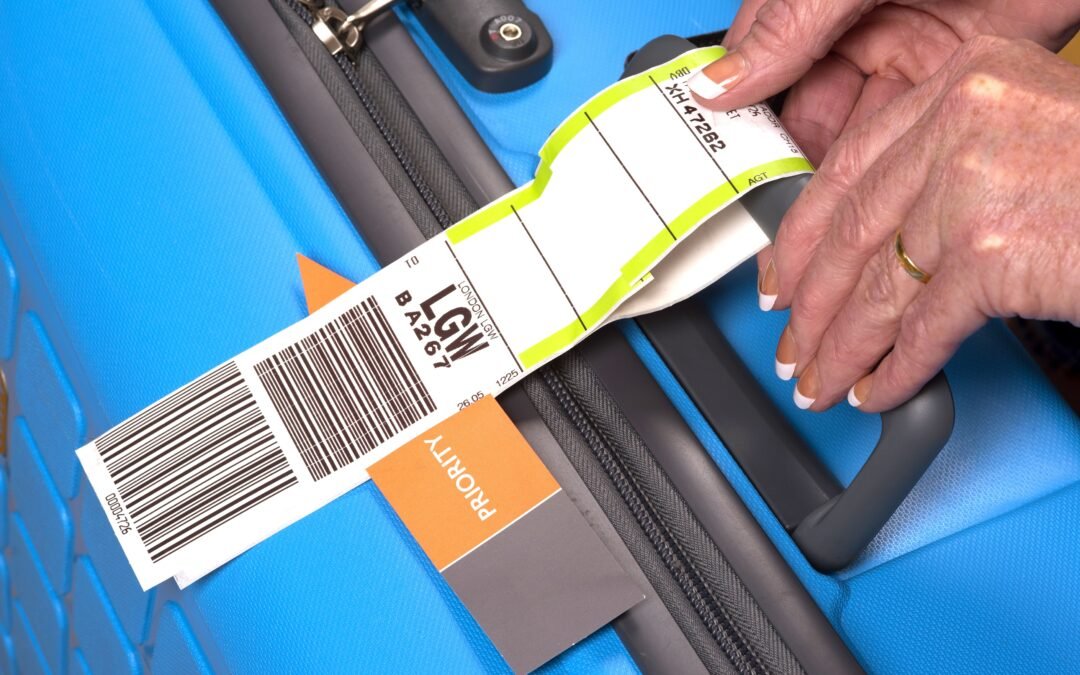
Giant suitcases with tags connected to them.
Not solely are fake passport, visa, and TSA PreCheck websites on the rise, however there is a new rip-off on the horizon. Final month, a Delta baggage claims supervisor took to Reddit to warn vacationers about a scam happening in airports that targets passengers who’ve checked baggage and are getting back from their journey. The supervisor, posting below the username Limp_Jeweler_2026, defined they have been seeing a rise in fraudulent claims for lacking objects that are not coming from the precise bag house owners.
In response to the put up, scammers look ahead to vacationers who take away their baggage tags in baggage declare areas. As soon as the tags are thrown away, they’re retrieved from trash bins and used to file reimbursement claims, all with the stolen data.
Whereas the rip-off would possibly seem to solely have an effect on the airways financially, it is an actual danger for vacationers as effectively. If a bag is genuinely misplaced, the fraud might delay and even block reimbursement for a legit declare. Baggage tags additionally typically comprise a passenger’s identify, level of origin, vacation spot, and flight numbers, that are particulars that may very well be stolen and used for extra sinister causes.
Some Vacationers Report Feeling Paranoid About Getting Their Private Data Stolen

A traveler holding a cell phone with an digital boarding move.
Within the thread, a number of commenters identified that, along with baggage tags, printed boarding passes can be taken and misused by scammers. Others expressed concern that many airports in america do not confirm identification on the gate earlier than boarding to stop this. One traveler additionally famous that when flying between cities in Canada, ID checks gave the impression to be normal.
|
They wrote: |
|---|
|
“Not even bag tags, printed boarding passes as effectively. Subsequent time you present as much as your seat and another person is there, do not be stunned.” |
|
“What’s shocking is that they do not do ID checks for home flights throughout boarding within the USA.” |
|
“[I] lately [flew between] Canadian cities, they usually completely verify everybody’s ID and can use it as an upcharge cause if there are spelling variations.” |
One other commenter reported feeling paranoid, sharing that they take further precautions to guard their private particulars.
“That is what my shredder is for. I am paranoid sufficient that I shred receipts and spam. Something with my identify on it will get shredded,” wrote PhoenixGate69.
Easy habits like shredding delicate paperwork go a great distance in retaining delicate data out of the unsuitable fingers.
How To Shield Your Private Data Whereas Touring By means of Airports
Within the Reddit put up, Delta worker Limp_Jeweler_2026 suggested vacationers to not take away and throw away baggage tags whereas nonetheless on the airport. The identical warning applies to boarding passes. Vacationers also needs to keep away from posting images of those paperwork on-line, particularly if their social media profiles are public.
Defending digital knowledge on the airport is simply as essential. In response to a video from CBS News, scammers typically goal passengers by way of airport Wi-Fi. Cybersecurity skilled Matthew Hicks warns that hackers arrange faux networks designed to trick vacationers. As soon as linked, the hackers can probably see all the pieces taking place on the machine.
Even legit airport Wi-Fi is dangerous, as customers on the identical community might be able to view different vacationers’ exercise. To remain secure, Hicks recommends confirming the official airport community with workers, solely visiting safe web sites that start with “https://” or show a lock icon, and utilizing a Digital Personal Community (VPN).
A VPN encrypts web visitors, making it a lot tougher for hackers to entry private knowledge.
Whereas scams like these would possibly seem to be uncommon occurrences, a number of easy habits could make an enormous distinction. Disposing of journey paperwork safely, avoiding suspicious networks, and taking steps to safe on-line exercise can all assist guarantee a visit goes easily from starting to finish.

Recent Comments