
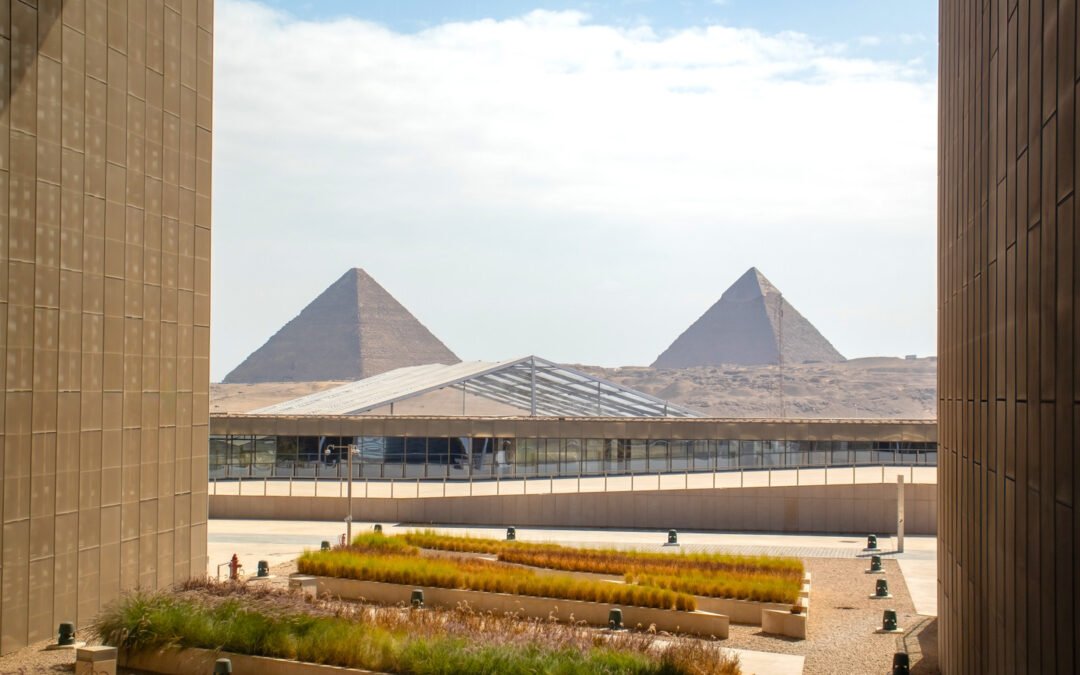
After its long-awaited opening following a long time of building, the Grand Egyptian Museum has remained a subject of dialogue amongst guests and locals alike.
In November, it drew criticism over a policy that critics said favored foreign visitors. Extra just lately, activists referred to as for the return of Egyptian artifacts after flooding at the Louvre damaged hundreds of works in its Egyptian Antiquities Department.
Now, the museum is as soon as once more within the highlight after a video circulating on-line seems to point out what some guests imagine is a design flaw. Museum officers, nevertheless, are pushing again towards these claims. Right here’s what they are saying.
A Viral Video Sparks Debate Over The Grand Egyptian Museum’s Design
Simply weeks after the Grand Egyptian Museum opened to the general public, a video circulating on social media has fueled a web-based debate. Shared on Instagram, the clip exhibits rainwater coming by means of the roof of the museum’s Grand Corridor and falling close to the statue of King Ramses II.
The footage additionally exhibits a principally empty corridor with warning indicators positioned on the ground and what seems to be like museum workers members standing close by in raincoats. On the identical time, the rain doesn’t seem to have an effect on all the house, as guests may be seen transferring alongside the sides of the corridor with out umbrellas or ponchos.
Museum Officers Say Restricted Rainwater Seepage Was Anticipated

Museum officers had been fast to reply. Based on Ahram Online, Ahmed Ghoneim, CEO of the Grand Egyptian Museum, informed Al-Hayah TV in a cellphone interview that the water seen within the video was a recognized side of the constructing’s open-air design.
“There may be an overhead construction that permits air flow and pure gentle, and the design was made for this function. There is no such thing as a design flaw. This can be a pure results of the design and can happen every time it rains within the coming years,” he stated.
Ghoneim continued, reassuring the general public that the statue of King Ramses II, which has been uncovered to the weather for 1000’s of years, stays protected within the corridor. He additionally famous that workers shortly routed the water to drainage shops, emphasizing that the constructing’s design carried out precisely as deliberate.
This rationalization, nevertheless, hasn’t stopped on-line debate. Commenters on Instagram questioned the museum’s design decisions and the large funding behind the challenge. Others stated the footage would make them suppose twice about visiting on a wet day.
|
“Billions of {dollars} and grand openings…” |
|
“Yeah, I’m not going to the museum within the rain!” |
|
“That’s what occurs once you choose a tiny, unknown agency for a big, 25-year-long challenge.” |
|
“Possibly they’re reenacting the circulate of the Nile by means of the museum.” |
Sadly, this isn’t the primary time the museum’s design has confronted scrutiny.
Final Month, One other Grand Egyptian Museum Design Function Shocked Guests

Simply final month, a different architectural feature surprised visitors. All through the museum, designers added shallow reflective swimming pools meant to reinforce the house visually. At first look, the swimming pools mix nearly seamlessly into the encompassing walkways. One viral Instagram video exhibits guests strolling ahead with out hesitation earlier than discovering themselves ankle-deep in water.
Not everybody noticed the characteristic as an issue, although. Some commenters pushed again on the criticism, saying the swimming pools weren’t a design flaw and that guests merely wanted to pay nearer consideration.
“The so-called ‘flaw’ isn’t even a mistake… Folks want to take a look at the place they’re going…” one commenter wrote on TheTravel’s article thread.
Others who commented on the unique Instagram put up discovered humor within the video and steered that the Grand Egyptian Museum ought to capitalize on the state of affairs.
“PLEASE PLEASE PLEASE DO NOT EVER “FIX” THIS, IT IS PERFECT AS IS. Simply promote towels and socks on the exit,” one other commenter wrote.
Nonetheless, the missteps grew to become frequent sufficient that the museum did find yourself assigning a guard to the world to assist information guests across the swimming pools.

Whereas the museum’s design decisions proceed to attract consideration, officers look like responding shortly—acknowledging considerations and making changes as points come up.

Recent Comments