
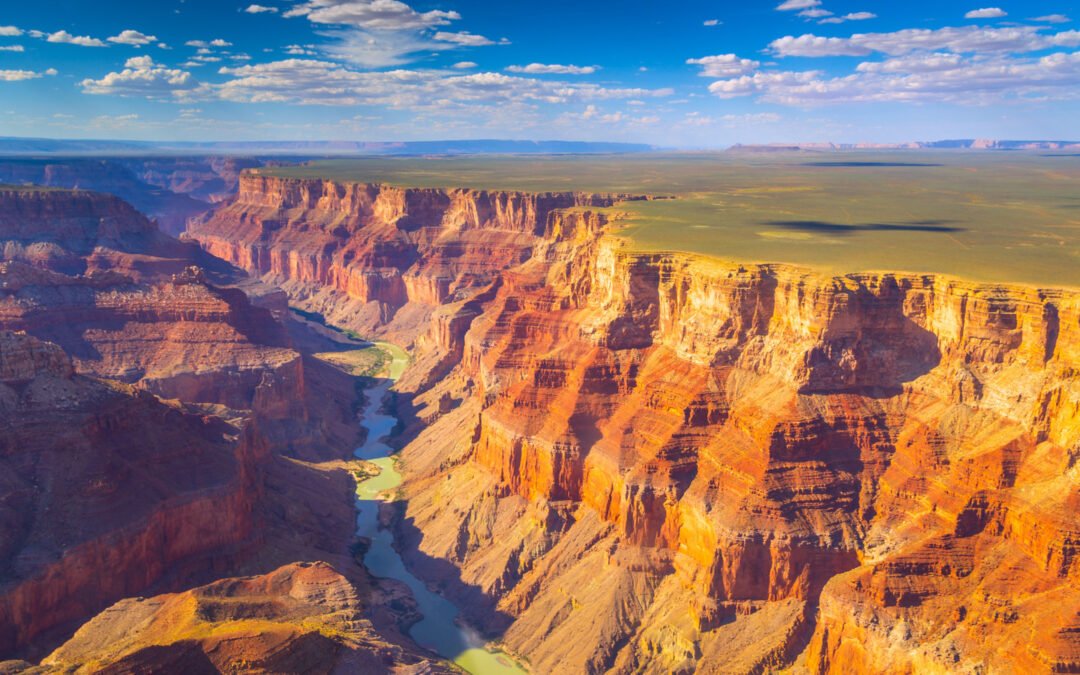
When most individuals consider Grand Canyon Nationwide Park, they image breathtaking views alongside a few of the most beautiful hiking trails in the country. What many don’t notice is that the canyon is also home to some of the most amazing discoveries.
In 2025, a crew of researchers from the College of Cambridge made a discovery that dates again greater than half a billion years. Working in an space often called the Grand Canyon’s “bathtub,” the scientists discovered fossils that present a glimpse into what life appeared like in the course of the Cambrian interval.
Right here’s what the newly published research reveals about this historical ecosystem.
Scientists Have Found Properly-Preserved, 500-Billion-12 months-Outdated Fossils At Grand Canyon Nationwide Park

Whereas analyzing rocks within the Grand Canyon’s Shiny Angel Formation (also referred to as the “bathtub ring” as a consequence of its form), a bunch of scientists discovered an unexpectedly well-preserved assortment of fossilized animals, together with:
- Crustaceans
- Mollusks
- Spiky-toothed worms
- Traces of animals the creatures ate up
To raised examine the fossils, the crew dissolved the encompassing rock utilizing hydrofluoric acid after which sifted by the remaining sediment below highly effective microscopes.
Though not one of the animals have been discovered utterly intact, distinctive options like enamel and feeding buildings made it attainable to establish the kinds of creatures they as soon as have been.
“By combining these fossils with traces of their burrowing, strolling, and feeding – that are discovered everywhere in the Grand Canyon – we’re in a position to piece collectively a complete historical ecosystem,” mentioned first writer Giovanni Mussini, a PhD scholar in Cambridge’s Division of Earth Sciences in a news release.
Lots of the fossils, which date to roughly 507 to 502 million years in the past, belong to early crustaceans associated to trendy brine shrimp, full with tiny enamel and hair-like buildings that helped funnel meals into their mouths.

Researchers additionally recognized slug-like mollusks with rows of enamel just like these of recent backyard snails, suggesting they scraped algae or micro organism from rocks.
Researchers Recognized A Model New Species Of Priapulids
Along with the shrimp-like crustaceans and slug-like mollusks, researchers found a wholly new species of priapulid worm among the many Grand Canyon fossils.
Priapulids, typically nicknamed “penis worms” or “cactus worms,” have been widespread in the course of the Cambrian interval. Nonetheless, in accordance with a video by Professor Dave Explains, solely 22 described dwelling species are acknowledged within the phylum Priapulida in the present day.
This newly found priapulid intrigued researchers, who described the fossil as having a whole bunch of branching enamel organized in rows. These enamel fashioned a complicated feeding system that after allowed the animal to brush meals particles into its versatile mouth.
Kraytdraco Spectatus Details:
|
Identify: |
|
|---|---|
|
Measurement: |
|
|
Habitat: |
|
Its uncommon measurement and dramatic tooth construction have been so putting that researchers gave it a singular identify to match. They known as it Kraytdraco spectatus, referring to the krayt dragon from the Star Wars movies.
These Uncommon Fossils Are Giving Researchers A Clearer Image Of Life Throughout The Cambrian Interval

Most fossils from the Cambrian interval come from hard-shelled animals, just because shells and skeletons protect extra simply. When scientists do discover soft-bodied animal fossils, they often come from environments low in oxygen and vitamins, circumstances that seemingly restricted how complicated these early creatures might develop into.
That’s why the fossil discovery within the Grand Canyon is so distinctive. Researchers say that these fossils are the primary recognized soft-bodied Cambrian animals preserved in an evolutionary “Goldilocks zone.”
Goldilocks zones have been oxygen-rich habitats that supplied ample vitamins, accelerating the evolution of early animals.
With meals available, animals on this area might afford to take evolutionary dangers, resulting in extra complicated feeding methods and behaviors.
“We are able to see from these fossils that Cambrian animals had [a] vast number of feeding kinds used to course of their meals, some which have trendy counterparts, and a few which are extra unique. Animals wanted to maintain forward of the competitors by complicated, expensive improvements, however the atmosphere allowed them to try this,” mentioned Mussini.
General, the findings from the Grand Canyon problem the concept that the Cambrian interval advanced slowly, exhibiting it was extra complicated than scientists as soon as believed.

Recent Comments